
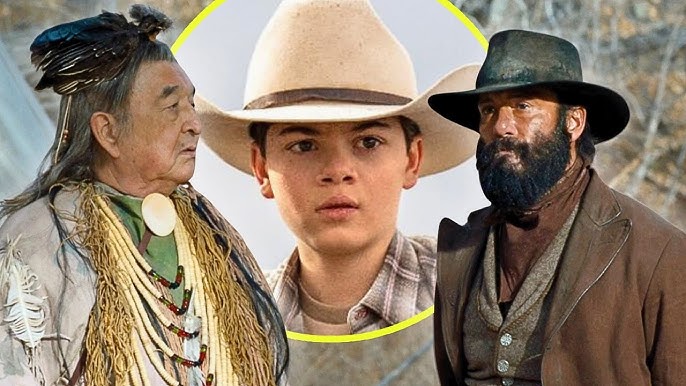
“The “”7 Generations”” Prophecy: How 1883 Predicted the Yellowstone Finale
The “7 Generations” Prophecy: How 1883 Quietly Predicted the Ending of Yellowstone
Taylor Sheridan may have revealed the ending of Yellowstone long before fans realized it. The clue was not hidden in a shootout, a business deal, or one of Beth Dutton’s brutal confrontations. It was hidden in a quiet conversation in 1883 — a moment between James Dutton and Crow Chief Spotted Eagle that seemed symbolic at first, but later became one of the most important pieces of the entire Dutton saga.
In 1883, James Dutton is leading his family across the frontier when tragedy changes everything. After Elsa Dutton is gravely wounded, James searches for a place where she can spend her final moments. That is when he meets Spotted Eagle, who points him toward the valley that will one day become the Yellowstone Dutton Ranch.
But Spotted Eagle does not simply give James the land. He gives him a warning.

He tells James that his people may settle there, but after seven generations, his people will rise up and take the land back.
At the time, many viewers saw the line as poetic foreshadowing — a powerful reminder that the Dutton family’s claim to the land was always temporary. But once the Yellowstone finale aired, that prophecy took on a completely different meaning.
Because in the end, the ranch does return.
Not through war.
Not through conquest.
Not through the Duttons being destroyed by outsiders.
It returns through Tate Dutton.
That is what makes the ending so powerful. Tate is not only a Dutton. He is also Broken Rock through his mother, Monica. He carries both sides of the conflict inside him: the family that held the land and the people connected to the land long before the Duttons ever arrived.
For years, Yellowstone built its story around one question: who truly owns the land? John Dutton believed the ranch had to be protected at all costs because it represented his family’s blood, sacrifice, and legacy. Thomas Rainwater fought for the same land from the other side, seeing it as stolen ground that should be returned to Native hands. Beth saw it as something to defend from corporations, developers, and enemies. Kayce often seemed trapped between every side of the war.
But Tate was different.
He was the bridge.
That is why the “seven generations” prophecy matters so much. Fans have debated the exact family tree math for years. Is Tate the sixth generation? The seventh? Does Elsa count even though she had no children? Does the line pass through James, John Sr., Jack, John II, John III, Kayce, and then Tate? Or does the 1923 timeline complicate that count further?\

The family tree became even more debated after later reveals from 1923, especially as new details about the Dutton bloodline changed how fans counted the generations. Online discussions exploded because every branch of the family seemed to shift the meaning of Spotted Eagle’s words.
But whether Tate is counted as the sixth or seventh generation, the emotional meaning is clear: he is the fulfillment of the promise.
The ranch does not simply remain in Dutton hands. It becomes something larger than the Dutton name. It becomes connected back to the people the land belonged to before James ever arrived.
That is why the final sale of the ranch carries so much symbolic weight. Selling the land for $1.25 an acre is not just a financial decision. It echoes the original cost of the land and closes a historical loop. The Duttons spent more than a century fighting to keep the ranch, only for the ending to reveal that keeping it forever was never truly the point.
The point was stewardship.
The point was sacrifice.
The point was returning what could never really be owned in the first place.
Gil Birmingham, who played Thomas Rainwater, has also suggested that he knew early on where the story was headed. That detail makes the ending feel less like a last-minute twist and more like something Sheridan had been planting from the beginning. 1883 was not just a prequel. It was a map.
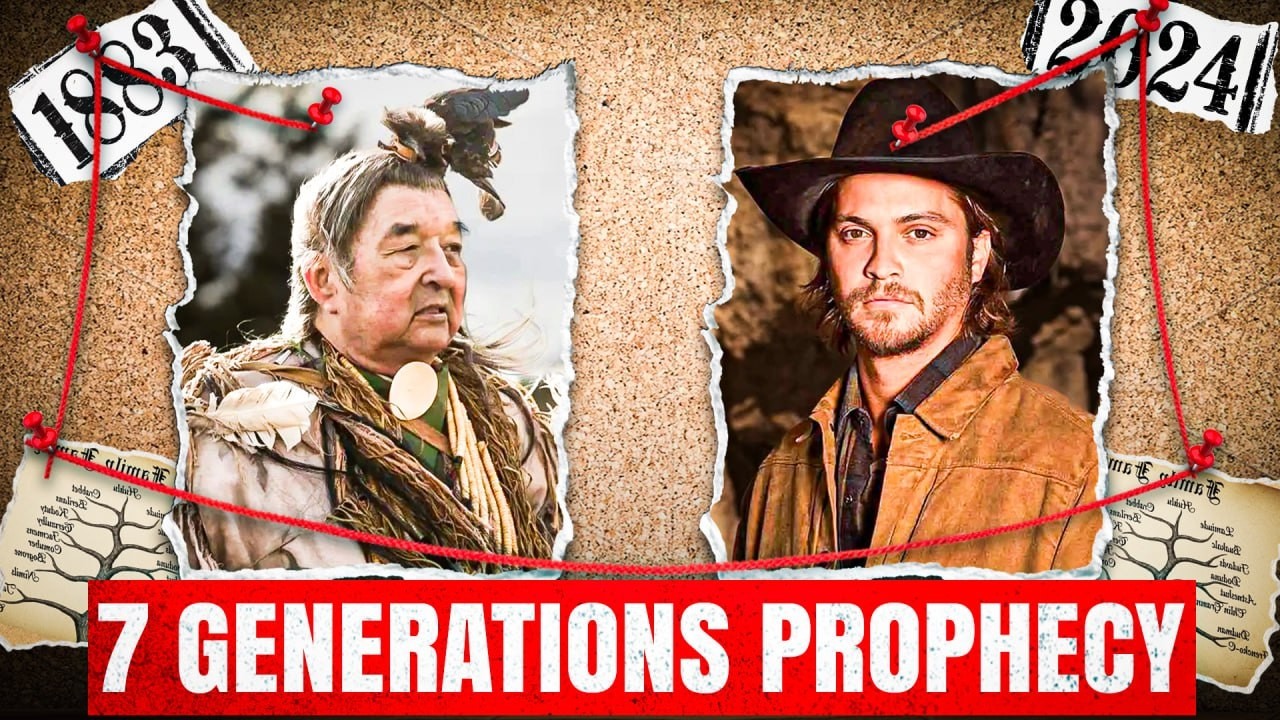
Elsa Dutton’s narration deepens that meaning even more. Throughout 1883, Elsa speaks like a ghost telling the story from beyond death, and her voice turns the Dutton origin into something mythic. She is the reason James chooses the land. Her death plants the family there. In a way, the entire ranch begins as a grave marker — a monument to love, loss, and grief.
So when the prophecy finally comes full circle, it is not just about Tate or Rainwater or the Broken Rock reservation. It is also about Elsa’s story finally reaching its end. The land that held her becomes the land that must be released.
Sheridan also appears to weave in the broader idea of thinking seven generations ahead, a philosophy often associated with Indigenous teachings, including Haudenosaunee traditions. Whether used directly or symbolically, the concept adds weight to the story. It suggests that choices about land, family, power, and survival should not be made only for the present. They echo forward.
That is exactly what the Duttons failed to understand for most of the series.
They fought for ownership.
The prophecy demanded perspective.
In the end, Yellowstone was never only about a ranch. It was about a debt carried across generations. 1883 showed the promise. Yellowstone delivered the payment.
And Tate Dutton — half-Dutton, half-Broken Rock — became the living answer to a prophecy spoken 141 years earlier.