
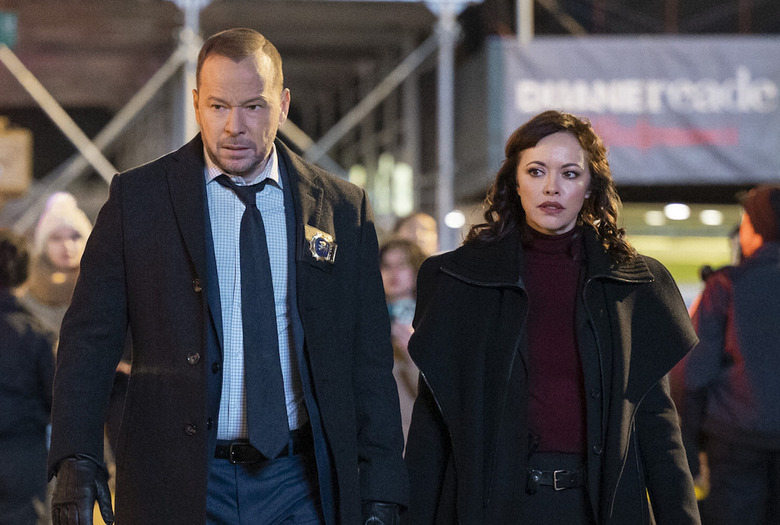
Blue Bloods: The Franchise That Refused to Die — From Cancellation Shock to Spin‑Off Storm
Fans of gritty police drama and family saga thought they’d seen the last of Blue Bloods — but the story isn’t over. What began as a beloved CBS procedural about New York’s Reagan clan has exploded into a full‑blown entertainment phenomenon with shocking twists, bitter Hollywood battles, and a spin‑off that has sparked debate across fan communities worldwide.
Here’s everything you need to know right now.
The End of an Era — But Not the End of the Story
After 14 seasons and nearly 300 episodes, CBS officially wrapped Blue Bloods on December 13, 2024, leaving a vacuum in primetime police drama that few shows could ever hope to fill. The series — created by Robin Green and Mitchell Burgess — chronicled the professional and personal lives of the Reagan family, a multigenerational dynasty of law enforcement officers in New York City. Its blend of compelling cases, family dinners, and moral quandaries made it a Friday night staple.
Fans were devastated. The show’s cancellation announcement months earlier had already sparked social media campaigns to #SaveBlueBloods — a testament to its cultural imprint.
But CBS and Paramount weren’t done with the franchise yet.

Boston Blue: The Spin‑Off That Split the Fanbase
Out of the ashes of Blue Bloods rose Boston Blue — a spin‑off centered around fan‑favorite Detective Danny Reagan, portrayed by Donnie Wahlberg. Unlike the original ensemble, Boston Blue transported Danny from New York’s streets to Boston’s police force, where he tackles crime alongside a new “cop family” drawn from the Silver clan.
Ernie Hudson’s Reverend Peters, Sonequa Martin‑Green’s Lena Silver, Maggie Lawson’s Sarah Silver and more round out the cast — a colorful tapestry giving Danny a fresh environment and fresh challenges.
The premiere on October 17, 2025 drew solid ratings, but it also sparked a firestorm of mixed reactions. Critics and fans alike noted that the initial episodes felt like a “watered‑down” version of the original — missing the emotional gravity and family synergy that made Blue Bloods a hit. One entertainment columnist even pointed out that the spin‑off opened with about 600,000 fewer viewers than comparable episodes from Blue Bloods’ run, a glaring metric for a franchise used to consistency.
Despite this, Boston Blue was renewed for a second season, proving that — love it or hate it — audiences are still invested in this universe.
Behind the Scenes Drama: Casting Shake‑Ups and Creative Politics
If viewers thought Boston Blue’s only controversy was its ratings, Hollywood insiders have revealed it wasn’t even close.
Originally the spin‑off was conceptualized around a completely different character — a Los Angeles cop uprooted to Boston — until CBS suggested pivoting to Danny Reagan, transforming the entire project. The network call essentially rewrote the DNA of the show before its first draft was even completed.
Fans still debate whether that decision was genius branding or creative compromise.
Then there’s Blue Bloods legend Tom Selleck — Frank Reagan himself — whose involvement (or absence) has become another major talking point. Selleck has kept a low public profile since the original series ended, and while rumors occasionally swirl about a possible cameo or reunion, he has repeatedly downplayed the idea of joining Boston Blue. Industry watchers say his schedule and creative differences might be behind the silence — but rumors persist.
Meanwhile, Selleck has turned his attention to new projects, including a forthcoming crime documentary series exploring real‑world justice cases — a fitting next chapter for an actor synonymous with law enforcement roles.
Shocking Personal Losses and Real‑Life Cost of Art
Beyond on‑screen drama, the Blue Bloods world has been rocked by real‑life heartbreak.
Beloved actor Alex Duong, known for portraying memorable characters within the Blue Bloods universe, tragically passed away at just 42 after a battle with cancer. His death in March 2026 sent shockwaves through the fan community, prompting a flood of tributes from co‑stars and viewers alike.
But another controversy hit closer to the industry’s power centers.
Actress Jennifer Esposito, a Blue Bloods alum, revealed she lost her home after mortgaging it to finance her directorial debut film — a move that drew fierce criticism toward Hollywood’s support (or lack thereof) for independent art. The emotional revelation — shared on social media — ignited wide discussion about the sacrifices artists make and the tough realities off screen.
Her candid message — calling for “basic human decency” in an industry rife with competition — had fans and fellow actors rallying in support.

Future Possibilities: More Blue Bloods on the Horizon?
Could this universe expand even further? Maybe.
While Boston Blue rolls into its second season, entertainment analysts point to Blue Bloods’ enduring popularity on streaming platforms like Paramount+ as evidence that the franchise still holds immense user demand. There are whispers — some serious, others purely fan wishful thinking — about possible movie adaptations, crossovers, or even a feature‑length reunion event.
With so many storylines still ripe for exploration and so many characters beloved by audiences, the Blue Bloods universe isn’t going quietly.
Why Fans Can’t Look Away
The franchise’s longevity isn’t an accident. At its core, this is a saga about duty, family, and justice — themes that resonate deeply especially amid today’s complex social climate. Whether you loved the original series, feel torn about Boston Blue, or just want closure (or chaos), Blue Bloods continues to be a cultural touchstone that demands attention.
So while old Wednesdays may be gone, the Blue Bloods saga lives on — evolving, dividing opinion, and sparking conversation with every twist.